

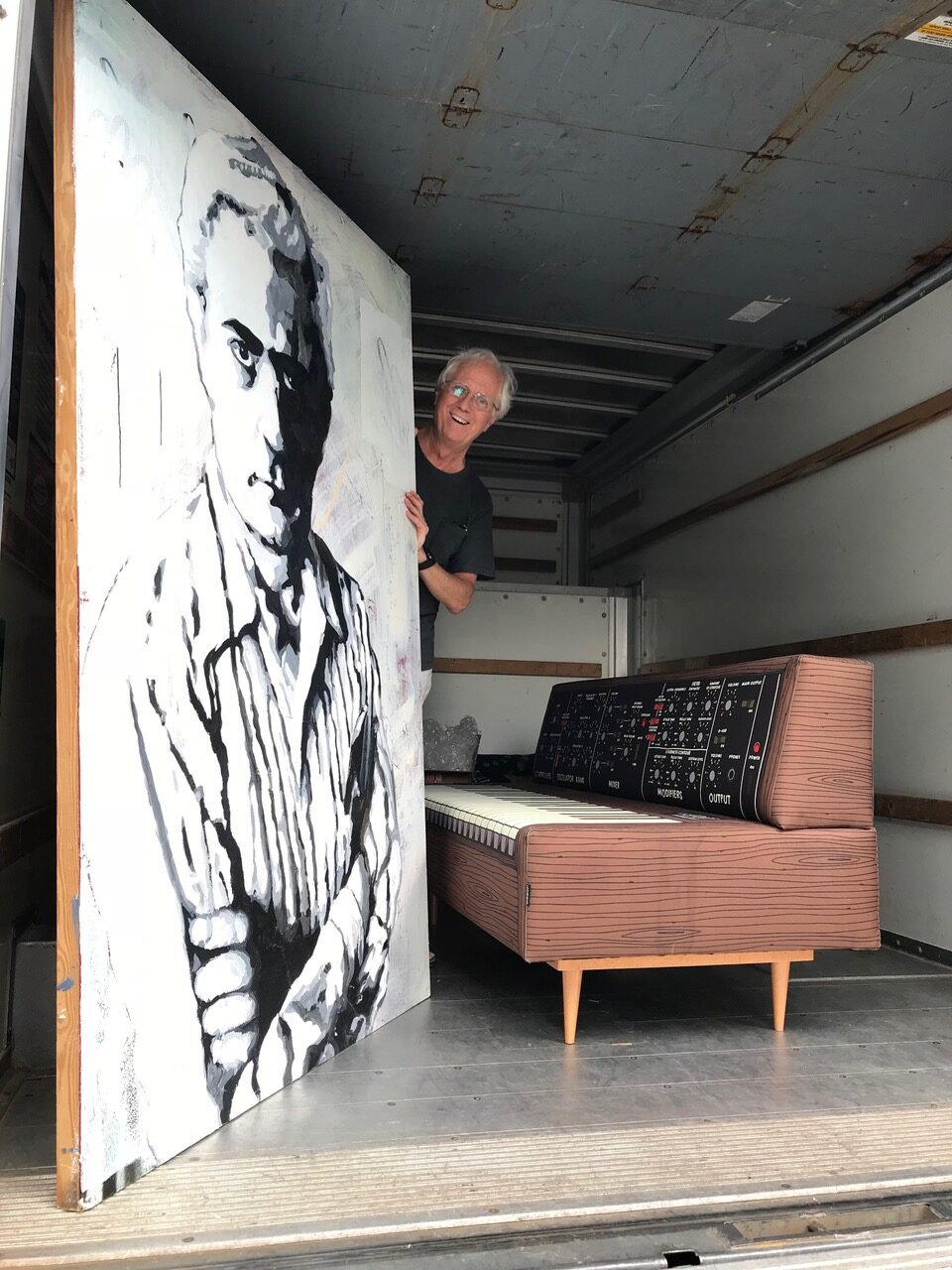
Geary Yelton assists in moving into the new Moogseum space at 56 Broadway Street, Asheville, NC in 2018
Dedicated to the Bob Moog Foundation: Making a Bequest
Written by Geary Yelton
Like most older electronic musicians, I recognize Bob Moog’s contributions to the path my life has taken. Without Bob, it’s unlikely that synthesizers would have become such an important element of popular music during my formative years. It’s personally important to me that his legacy continues. I’ve tried to give back by volunteering and supporting the Bob Moog Foundation in any way I could. Every year I host a Facebook fundraiser for the BMF on my birthday, for example, and I currently serve on the foundation’s Board of Advisors.
Another way I’ve found to contribute is by remembering the Bob Moog Foundation in my will and making the BMF a beneficiary of my retirement account. That way, I know I’ll continue to support the foundation’s mission after I’m gone. I figure it’s the least I could do. If you recognize the value of the Moogseum, Dr. Bob’s SoundSchool, and other efforts to preserve Bob’s legacy, then I urge you to consider contributing to the Bob Moog Foundation now and in the future.
First Contact
My first real interaction with Bob was when we worked on a book together. It was a follow-up to my 1989 book Music and the Macintosh, an anthology called The Musical PC [MIDI America, 1992]. As the book’s editor and a contributor, I collaborated with seven other authors. Bob wrote the sections on music education software. We became acquainted via phone and email during our conversations on that project. He invited me to visit him at his workshop at Big Briar in Leicester, but regrettably I failed to follow through.
After that Bob and I always spoke to one another at NAMM Shows, both in Anaheim and in Nashville. I’d been writing for Electronic Musician since its first issue in 1985, and by 2000 I was working full-time as an EM editor. When Bob and his company introduced the Minimoog Voyager in 2002, I was assigned to review it. At the time I lived in Charlotte, so we arranged for Bob and Moog engineer Steve Dunnington to give me an overview of the Voyager before I took one home to explore. On a later occasion Bob and I had lunch in Asheville with EM’s publisher and some of the Moog Music staff.
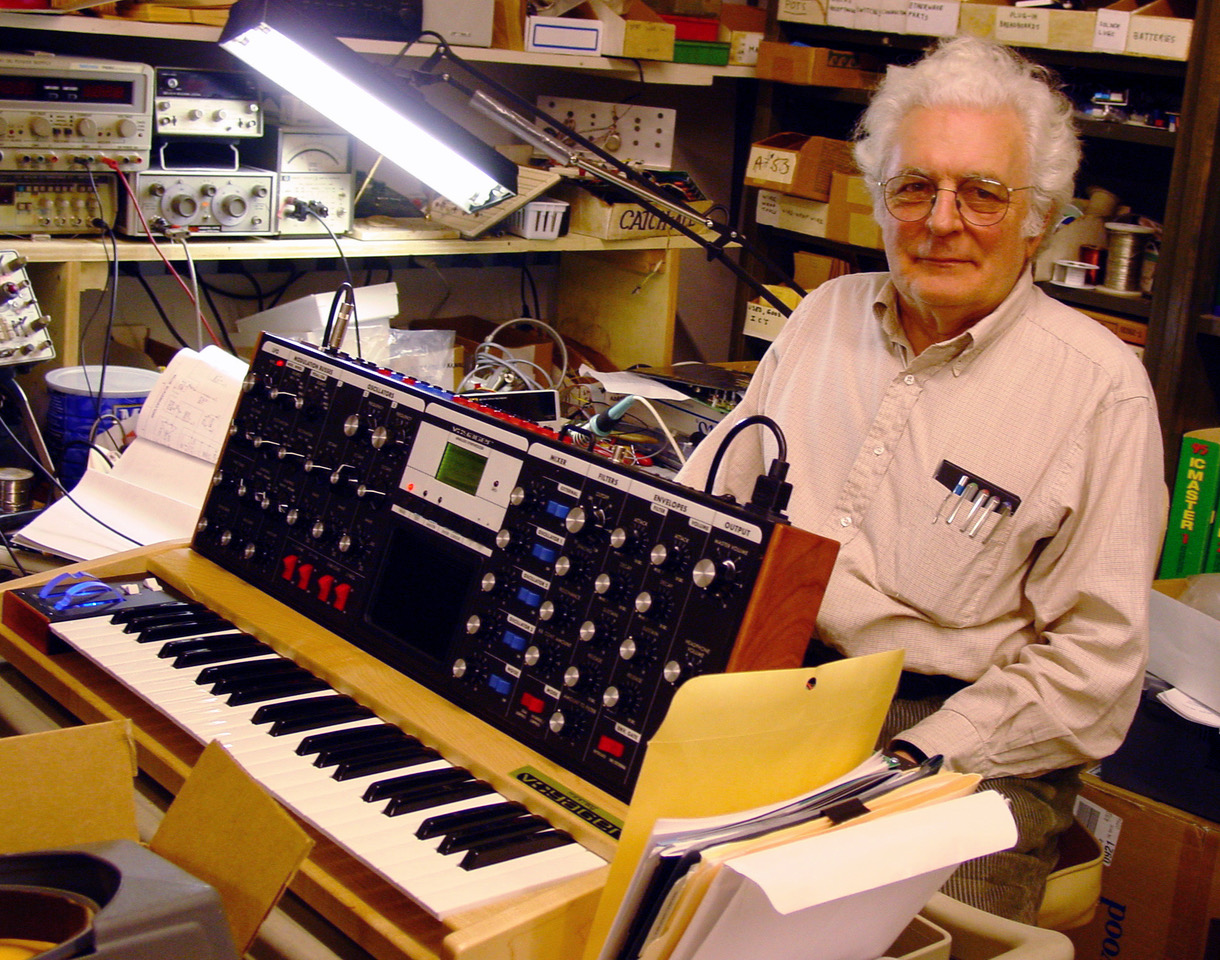
Bob Moog with Moog Voyager
In 2005, like everyone else, I learned that Bob had a brain tumor. I hoped for the best and feared the worst. On August 21st my worst fears were realized when Bob passed away. Immediately after his touching memorial service at the Orange Peel in Asheville, I was invited (along with Wendy Carlos and a few other out-of-town visitors) to visit the home he shared with his second wife Ileana Grams. A year later, Bob’s daughter Michelle Moog-Koussa, whom I’d never met, announced the formation of the nonprofit Bob Moog Foundation.
Because I was Electronic Musician’s senior editor and I always held Bob in such high regard, my relationship with the foundation was probably inevitable. I lived only two hours from Asheville and synthesizers were my beat, making me the obvious choice to report on any stories about Moog Music or the BMF.
Event Horizons
The first foundation event I attended was Enter the Mind of Moog, a fundraiser at the Orange Peel in November 2007. I had my video camera and interviewed several of the event’s organizers, including executive director Michelle. The event was quite a success and attracted a sizable crowd of supporters.
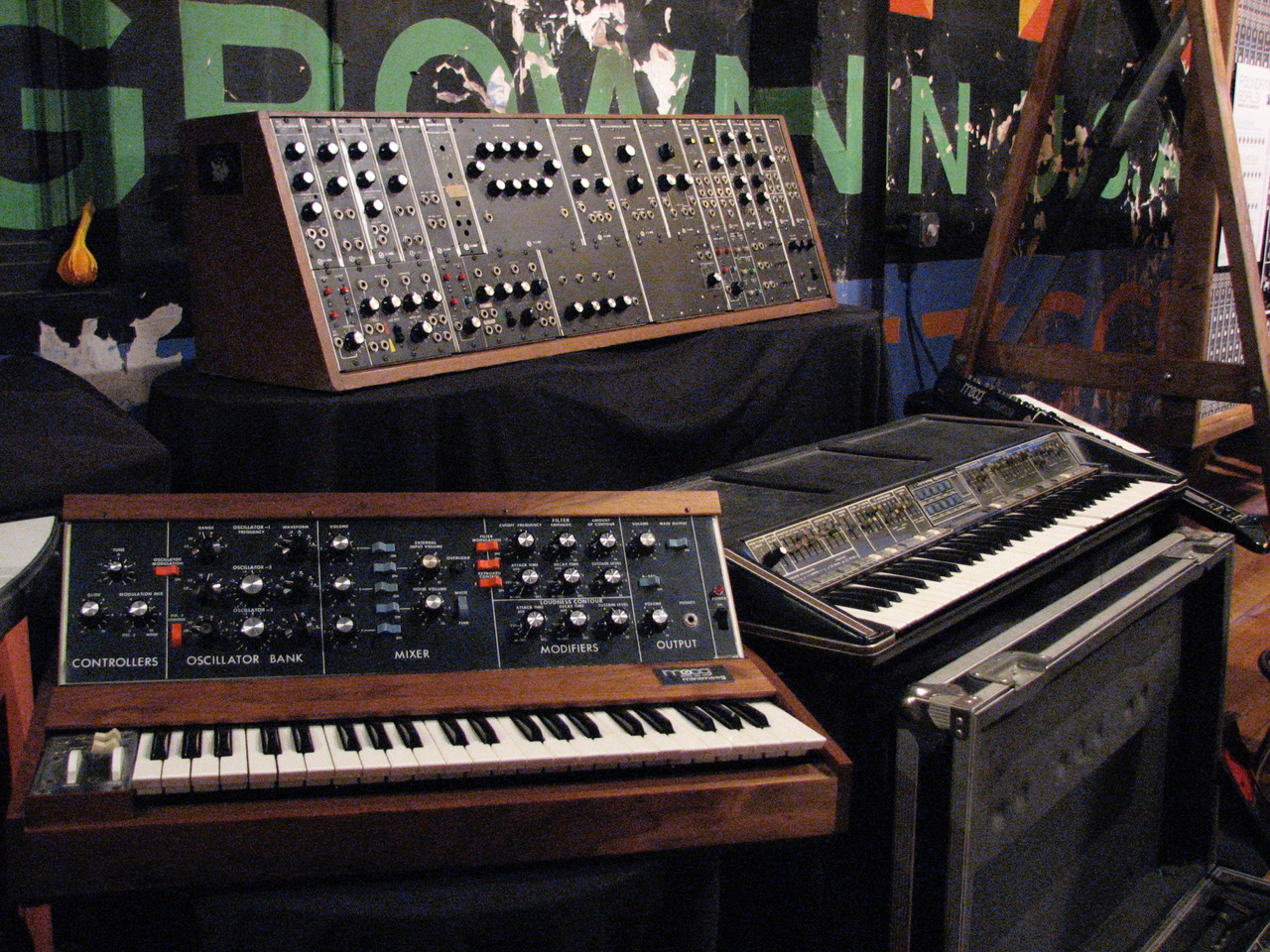
Vintage Moog synthesizers at Enter the Mind of Moog Event, November 2007
In February 2009 I traveled to Knoxville to cover the very first Big Ears Festival. The BMF had a booth distributing information, and I ended up hanging out with Michelle and several foundation volunteers. Three months later I attended another fundraiser at the Orange Peel, this time in celebration of Bob’s 75th birthday. Again, I interviewed several of the foundation’s volunteers and supporters on camera. As I had with her father, I also spoke with Michelle every year when I attended the NAMM Show.
In May 2010 I relocated to Asheville. Three people showed up at my new home to help me unload the moving truck: Michelle, her son Gregory, and then-marketing director for Moog Music Chris Stack. The next afternoon Michelle invited me to her home to celebrate her mother Shirleigh’s birthday, and Shirleigh gave me a copy of her cookbook. I quickly realized that moving to Asheville had been an outstanding decision. Less than four weeks later, the BMF held another successful fundraiser called Moogus Operandi, featuring Erik Norlander and his massive modular Moog, the Wall of Doom. Echo Mountain Recording hosted a VIP party for the BMF the night before.
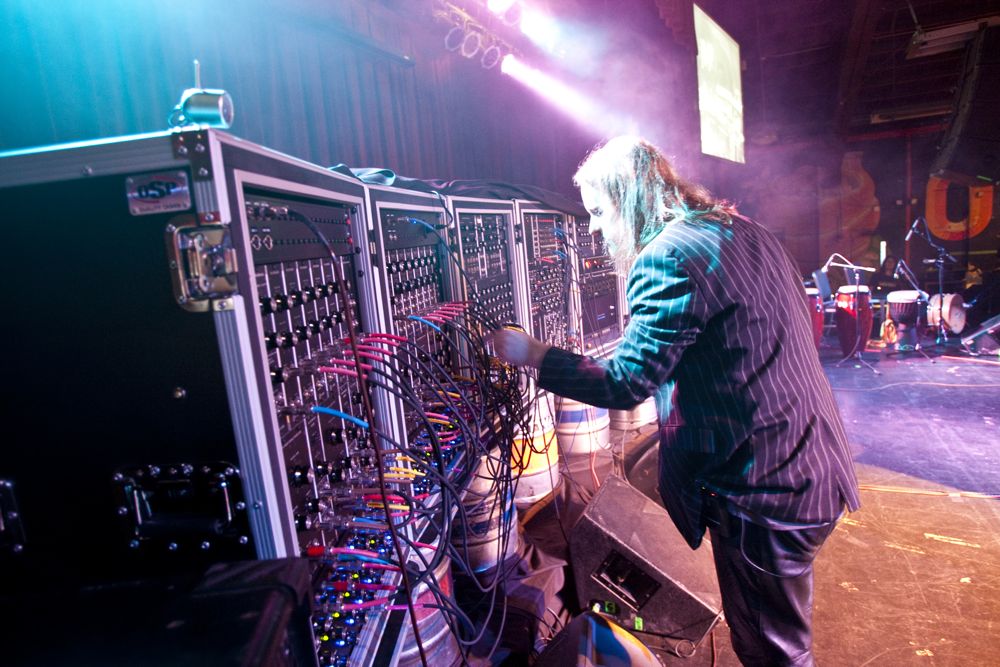
Erik Norlander and his “Wall of Doom” at Moogus Operandi. Photo: Jon Leidel
As luck would have it, October 2010 was the first time that Moogfest was held in Asheville, and Keyboard magazine assigned me to cover it. The BMF was a big part of the festival, of course. I served on two panels during the festival—one the foundation organized and one Moog Music organized. I covered subsequent Moogfests in Asheville the three following years, as well as a similar festival called Mountain Oasis in 2014, where I was invited to interview electronic rock legend Gary Numan on stage in front of 500 people. The Bob Moog Foundation was an integral part of those four festivals, as well.
The following year, Michelle recruited Erik Norlander to host a synth training video, and I was part of the camera crew. Unfortunately, the video never got past the editing stage and was never released. The year after that, Michelle invited me to join the team putting together the curriculum for Dr. Bob’s SoundSchool. We met for several weeks in a row, and I focused mostly on preparing second-grade teachers to teach schoolkids about the physics of sound.
Words of Advice
At some point Michelle and I began taking walks together in downtown Asheville. We’d discuss whatever issues the foundation was facing, and she would consider my opinions. She suggested the idea of creating an advisory board and asked me to draw up a proposal. Eventually BMF’s Board of Directors agreed to recruit a group of industry luminaries to serve in an advisory capacity, and the BMF Board of Advisors was born.
As a BMF volunteer, I’ve also written and edited press releases and other materials, folded T-shirts in the Moogseum store, helped move the foundation’s offices and its archival collection from one location to another, taken part in many fundraisers, and generally beat the drum in the press on behalf of the BMF. I’ve even pitched any pop stars I met to support the foundation whenever I had the chance.
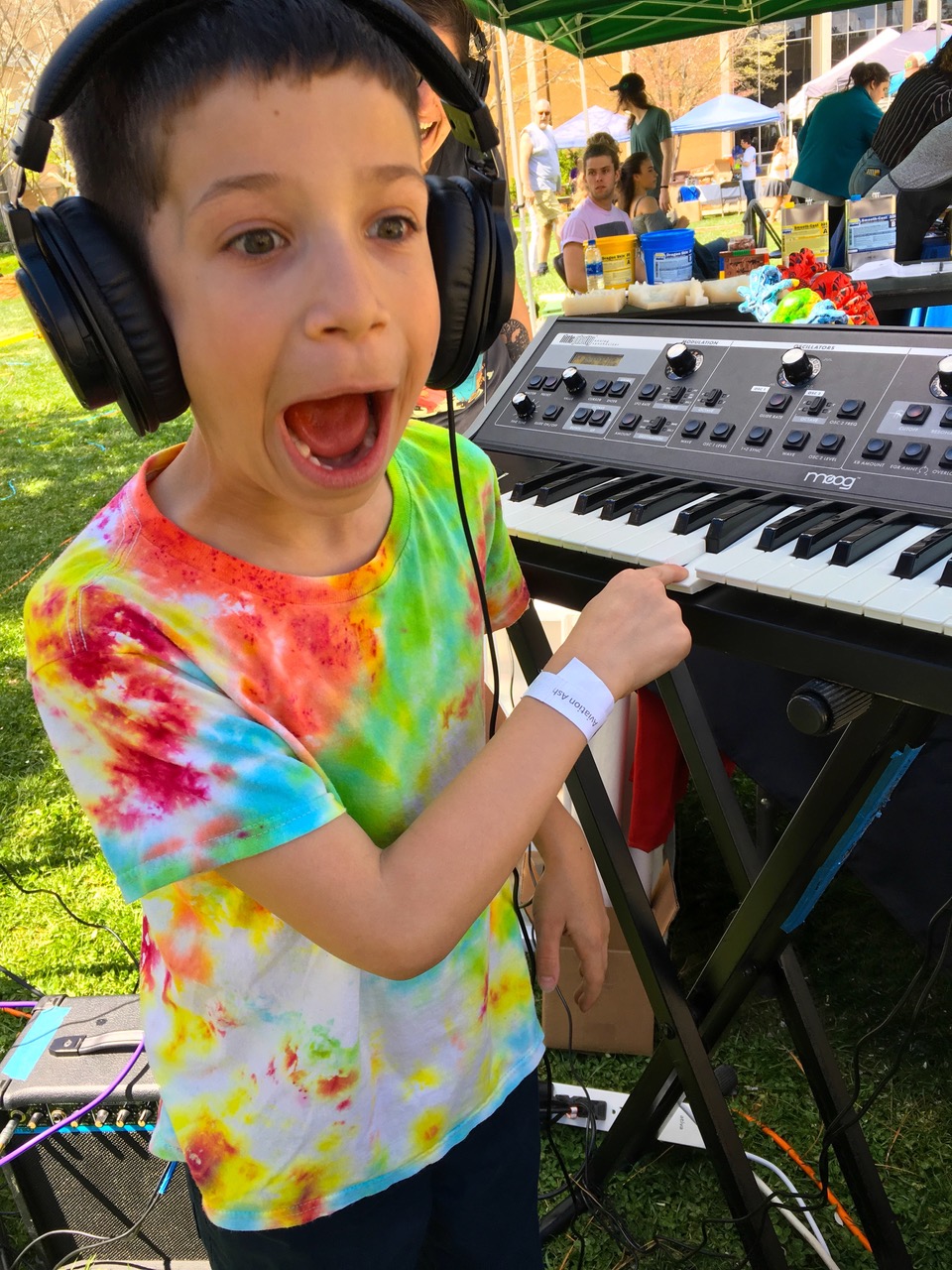
Dr. Bob’s SoundSchool installation at UNC-Asheville event
Every step of the way, I helped disseminate news about the BMF in Electronic Musician, Keyboard, and Synth and Software, doing whatever I could to draw attention to their important work. For a couple months in early 2019 I was an actual paid BMF staffer, selecting the instruments and then researching and writing the Moogseum’s history of synthesizers. I wrote a cover story about the Moogseum in the inaugural issue of Synth and Software and another major story about the Moogseum’s grand opening, an event called Moogmentum, the following month.
Launching the Moogseum was the realization of a dream that began by restoring Bob Moog’s archival collection, including prototype instruments, drawings, photos, schematics, recordings, and other ephemera from his life. That effort continues to this day. In addition, the foundation’s educational efforts have enriched the lives of thousands of schoolchildren by giving them hands-on experience that helps them understand the connections between music and science. Please join me in doing what you can to ensure that the Bob Moog Foundation’s efforts continue into the future.